

Mercedes-Benz 4MATIC® All-Wheel Drive Guide | Mercedes-Benz of New Rochelle
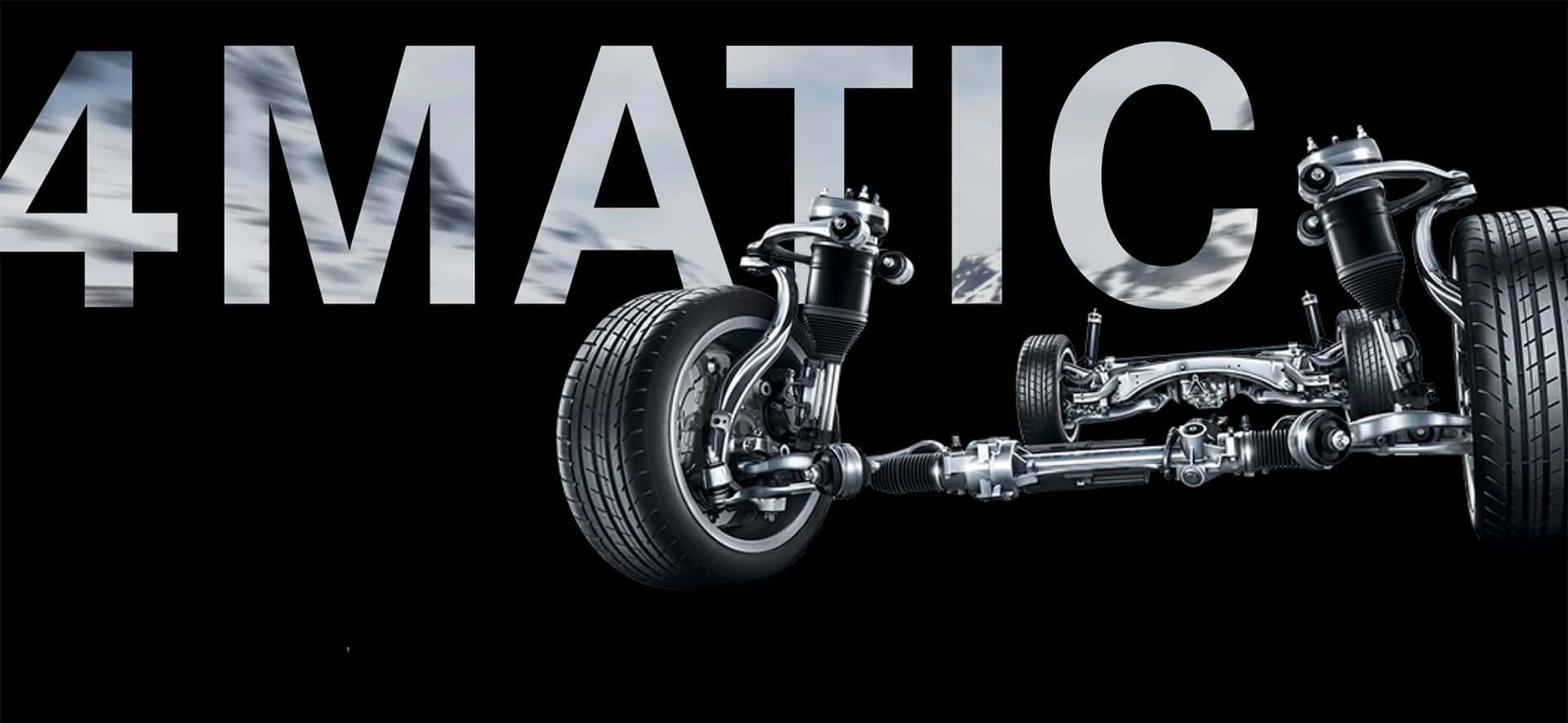
Mercedes-Benz 4MATIC® All-Wheel Drive: Engineered for Confidence on Westchester Roads
Whether you are navigating a sudden coastal rainstorm along I-95, climbing slush-covered hills in Westchester County, or taking tight curves on the Hutchinson River Parkway, traction is everything. Mercedes-Benz 4MATIC® all-wheel drive is engineered to deliver composed handling, instant grip, and year-round confidence—without sacrificing the refined ride comfort and fuel efficiency you expect from the three-pointed star.
Quick Takeaway
Mercedes-Benz 4MATIC® continuously monitors wheel speed and road conditions to send power to the wheels with the best grip. Available in multiple configurations—from efficiency-focused Variable 4MATIC® to track-tuned AMG® Performance 4MATIC®+®—the system pairs seamlessly with 4-wheel Electronic Traction System (4-ETS®) to keep you firmly planted in snow, rain, or dry cornering.
How Mercedes-Benz 4MATIC® Works
Unlike reactive all-wheel-drive systems that wait until your tires lose grip before engaging, Mercedes-Benz 4MATIC® is fully integrated into the vehicle’s transmission, suspension, and stability control architecture.
At its core, the system routes power from the transmission through an integrated transfer case and differential, while onboard sensors continuously track wheel speed, steering angle, and yaw rate. If the system detects slip—or anticipates a loss of traction during hard acceleration or cornering—it adjusts torque distribution within milliseconds.
4-ETS®: Turning Slip Into Grip
Pioneered by Mercedes-Benz, the 4-wheel Electronic Traction System (4-ETS®) works hand-in-hand with 4MATIC®. When one or more wheels begin to spin on ice, snow, slush, or loose gravel, 4-ETS® rapidly pulses the brakes on the slipping wheel(s). That action automatically redirects driving torque to the wheels that still have solid traction—acting like virtual locking differentials without added mechanical weight or driver intervention.
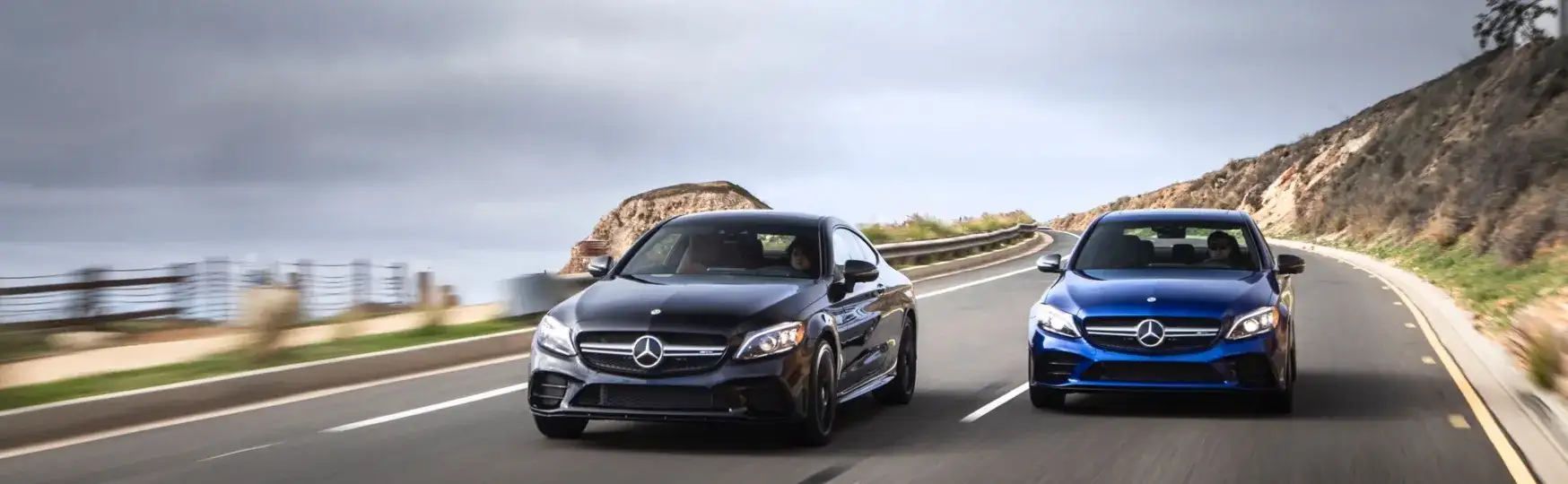
Comparing Mercedes-Benz 4MATIC® Drivetrain Variants
Because a compact urban crossover has different driving dynamics than a full-size luxury flagship or a high-horsepower AMG® coupe, Mercedes-Benz tailors 4MATIC® to match each vehicle’s architecture:
| Drivetrain System | How It Distributes Power | Key Advantage | Featured Models |
|---|---|---|---|
| 4MATIC® Variable AWD | Automatically shifts from pure front-wheel drive during steady cruising to a 50:50 front-to-rear split when conditions demand extra grip. | Maximizes fuel efficiency on dry highways while providing instant winter traction. | CLA Coupe, GLA SUV, GLB SUV |
| 4MATIC® Permanent AWD | Always active with a fixed front-to-rear torque split, continuously powering all four wheels. | Delivers balanced all-weather stability, confident cornering, and smooth ride composure. | C-Class, E-Class, S-Class, GLC, GLE, GLS |
| AMG® Performance 4MATIC® | Rear-biased permanent torque split (typically 31:69 on sedans/coupes and 40:60 on SUVs) or electrohydraulically controlled variable distribution. | Enhances launch acceleration and agile cornering dynamics under high horsepower. | Select Mercedes-AMG® 35, 43, and 53 models |
| AMG® Performance 4MATIC®+® | Fully variable torque distribution capable of shifting seamlessly from all-wheel drive to 100% rear-wheel drive. | Combines all-weather traction with pure rear-wheel-drive sports car dynamics. | Mercedes-AMG® E-Class, S-Class, GT, and select 63 models |
Over a Century of All-Wheel-Drive Innovation
Mercedes-Benz’s expertise in multi-wheel traction stretches back more than 120 years—long before modern passenger-car AWD became mainstream:
- 1903–1907: Paul Daimler sketches the first Mercedes-Benz AWD automobile design, leading to the 1907 Dernburg-Wagen—the world’s first everyday all-wheel-drive passenger vehicle.
- 1951 & 1979: Mercedes-Benz introduces the legendary Unimog and the handcrafted G-Class (Geländewagen), setting global benchmarks for extreme off-road capability.
- 1985–1987: The modern 4MATIC® passenger-car system debuts at the Frankfurt Motor Show and launches on the W124 E-Class with electronically controlled differentials.
- 1997–1999: The first-generation M-Class SUV introduces 4-ETS®, which soon expands to E-Class 4MATIC® sedans and wagons.
- Today: Lightweight, high-efficiency 4MATIC® systems are available across virtually the entire Mercedes-Benz lineup—spanning gasoline, mild-hybrid, plug-in hybrid, and all-electric EQ models.
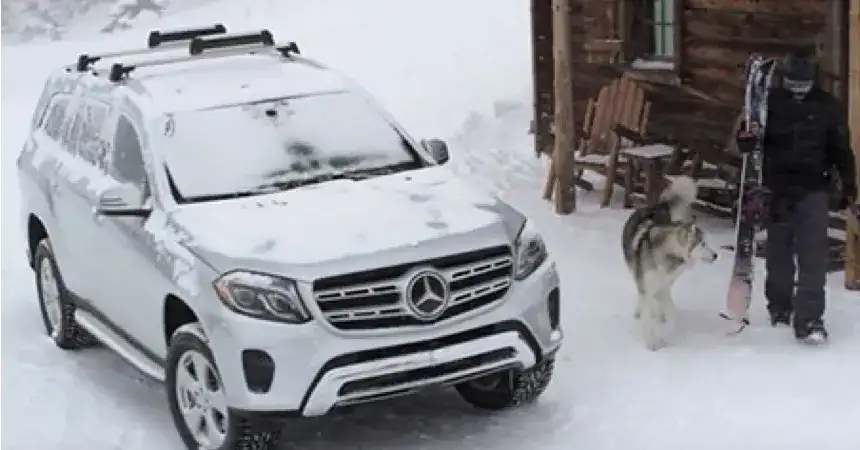
Why Experience 4MATIC® at Mercedes-Benz of New Rochelle?
Choosing the right drivetrain is easier when you can feel the difference firsthand on familiar roads. At Mercedes-Benz of New Rochelle, our product specialists help Westchester drivers compare 4MATIC® sedans, SUVs, coupes, and electric models side by side—matching the exact drivetrain configuration to your daily commute, weekend travel, and seasonal driving needs.
And when it is time for routine maintenance, our factory-trained service technicians use Mercedes-Benz precision four-wheel alignment equipment and Genuine Parts calibrated specifically for 4MATIC® tolerances.
Explore 4MATIC® Models in New Rochelle
Ready to experience year-round control behind the wheel? Browse our current selection of 4MATIC®-equipped vehicles or schedule a test drive on East Main Street today.
Frequently Asked Questions
Is Mercedes-Benz 4MATIC® always on?
It depends on the model. Permanent 4MATIC® systems (found on models like the C-Class, E-Class, S-Class, GLC, GLE, and GLS) continuously send power to all four wheels at all times. Variable 4MATIC® systems (found on front-drive-architecture models like the CLA, GLA, and GLB) operate primarily in front-wheel drive during steady highway cruising to save fuel, then seamlessly engage the rear axle the instant extra traction is needed.
Does 4MATIC® require winter tires in New York?
While 4MATIC® dramatically improves acceleration and stability in rain, slush, and light snow, all-wheel drive cannot shorten braking distances on ice. For drivers who regularly travel through heavy snow in Westchester County or upstate New York, pairing 4MATIC® with dedicated winter tires provides optimal stopping power and cornering grip.
What is the difference between 4MATIC® and AMG® 4MATIC®+®?
Standard 4MATIC® prioritizes balanced all-weather stability, comfort, and efficiency. AMG® Performance 4MATIC®+® uses an electronically controlled electromechanical clutch to continuously vary torque between the front and rear axles—from maximum all-wheel-drive traction all the way to 100% rear-wheel drive for sharper, performance-focused handling.
Does 4MATIC® require special maintenance?
4MATIC® is engineered for long-term durability and integrates directly into your vehicle’s standard Mercedes-Benz Service A and Service B schedule. Maintaining matched tire tread depths, proper inflation pressures, and periodic four-wheel alignments at an authorized Mercedes-Benz service center keeps the transfer case, differentials, and wheel-speed sensors operating at peak precision.

0 comment(s) so far on Mercedes-Benz 4MATIC® All-Wheel Drive Guide | Mercedes-Benz of New Rochelle